
Sovereignty
Not Your Keys,
Not Your Coins.
Self custody is the most important skill every Bitcoin holder must learn. It is the difference between truly owning Bitcoin and just having a number on someone else's spreadsheet.
The Foundation
Why Self Custody
Matters.
You Own Your Keys, You Own Your Coins
In crypto, possession of private keys means ownership. Without your own keys, you are trusting a third party — and that trust has failed millions of people.
No Bank Can Freeze Your Funds
Governments, banks, and exchanges can freeze accounts overnight. With self custody, your Bitcoin is mathematically yours — no entity can touch it.
Protection From Exchange Collapse
FTX, Celsius, Mt. Gox — billions lost when exchanges collapsed. When you self-custody, you eliminate counterparty risk entirely.
Benefits
What You Gain With
True Ownership.
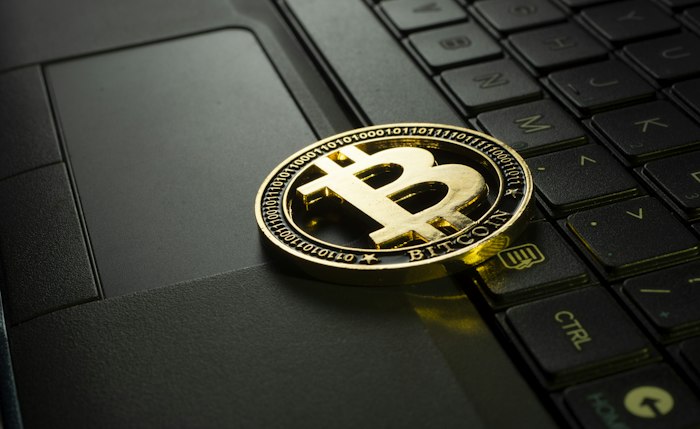
The Golden Rule
"If you don't hold the keys, you don't own the Bitcoin."
Wallet Types
Hot Wallet vs
Cold Wallet.
Hot Wallet
Connected to Internet
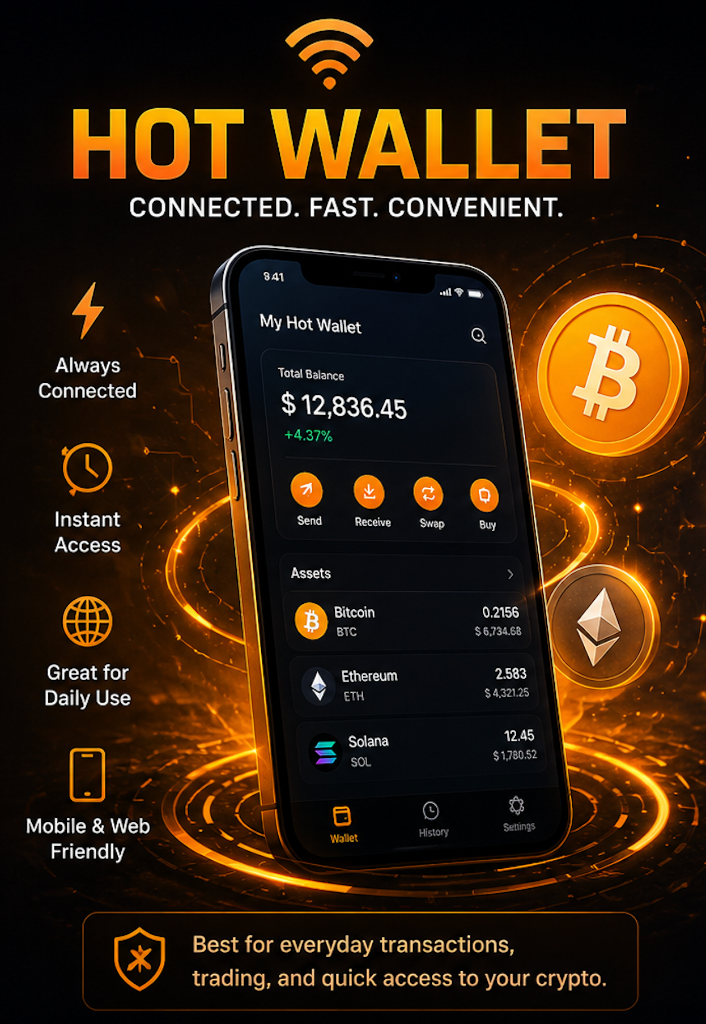
Software wallets that live on your phone or computer. Easy to use for daily transactions but exposed to online threats.
Examples
Best For
Small spending amounts only. Treat it like a physical wallet — don't keep your life savings in it.
Cold Wallet
Offline / Air-Gapped
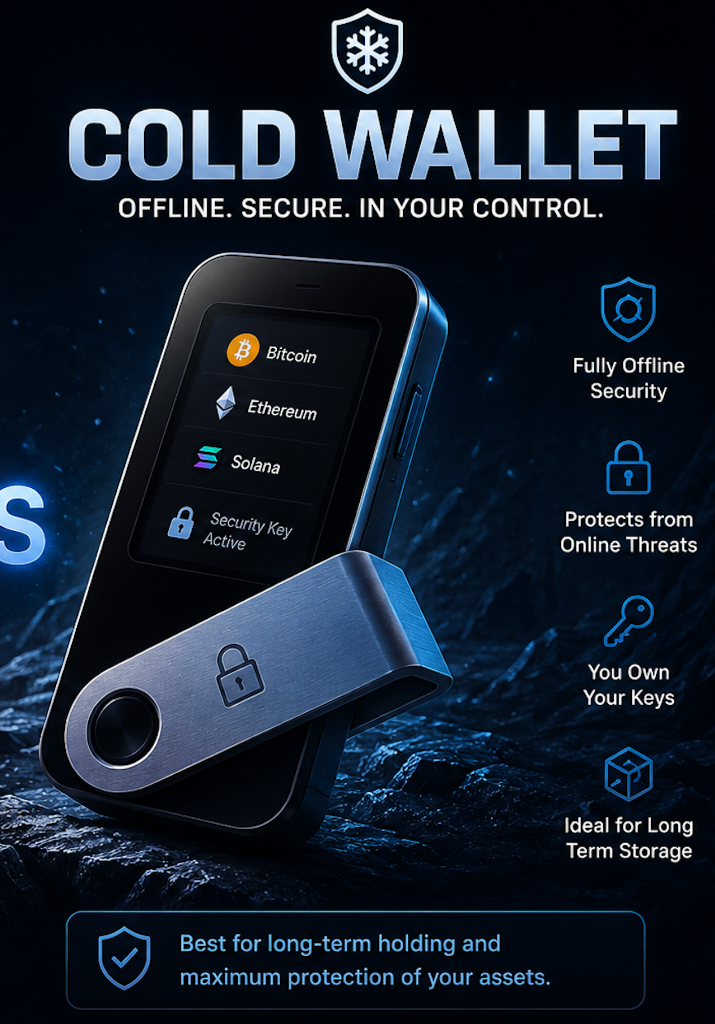
Hardware devices that store your private keys completely offline. The gold standard for securing long-term Bitcoin holdings.
Examples
Best For
Long-term Bitcoin storage. If you're serious about self custody, this is non-negotiable.

FTX: $8B Lost
Mt. Gox: $460M
Celsius: $4.7B
Counterparty Risk
The Hidden Danger
of Exchanges.
Exchanges are businesses. They can go bankrupt, get hacked, exit-scam, or be shut down by governments. When this happens, your Bitcoin on their platform can vanish overnight.
Exchanges are great for buying Bitcoin. They are terrible for storing it long-term.
"Use exchanges to stack. Use cold wallets to store. Move your Bitcoin off the exchange immediately after purchase."
Action Plan
How to Protect
Yourself.
Buy a Hardware Wallet
A hardware wallet (cold wallet) keeps your private keys offline and away from hackers. Trusted brands: Ledger, Trezor, Coldcard.
Write Down Your Seed Phrase
Your 12 or 24-word seed phrase is your master key. Write it on paper — never store it digitally or take a photo of it.
Store It Physically Secure
Keep your seed phrase in a fireproof safe, safety deposit box, or engrave it on steel. Make multiple copies in separate locations.
Never Share Your Keys
No legitimate company, support agent, or person will ever ask for your private key or seed phrase. If they do — it is a scam.
Verify Receiving Addresses
Always verify wallet addresses on your hardware wallet screen before sending. Malware can swap clipboard addresses.
Test With Small Amounts First
Before moving large amounts, test your wallet setup with a small transaction and practice the recovery process.
Stay Safe
Scams to
Avoid.
The crypto space is full of bad actors. Know what to look for before they take your Bitcoin.
Fake Support
Scammers pose as customer support on Discord, Twitter, and Telegram asking for your seed phrase. Legitimate support never asks for this.
Phishing Sites
Fake websites that look identical to real wallets or exchanges. Always double-check the URL and bookmark the real site.
Giveaway Scams
"Send 1 BTC, get 2 BTC back." No one is giving away free Bitcoin. If it sounds too good to be true, it is a scam.
Rug Pulls
Projects that hype up a token, collect funds from investors, then disappear. Stick to Bitcoin and vetted projects.
SIM Swapping
Hackers take over your phone number to bypass 2FA on exchanges. Use hardware security keys (YubiKey) instead of SMS 2FA.
Fake Wallets
Malicious wallet apps in app stores that steal your seed phrase. Only download wallets from official websites.
Advanced Security
Hardware 2FA:
YubiKey.
A hardware security key is the strongest form of two-factor authentication available. We recommend YubiKey by Yubico for anyone serious about securing their crypto accounts.
YubiKey by Yubico
Recommended 2FA Hardware
A YubiKey is a small physical USB/NFC device that acts as your second factor of authentication. Instead of a code sent via SMS (which can be intercepted via SIM swap attacks), you physically tap or plug in your YubiKey to prove it's really you.
Even if a hacker steals your password, they cannot access your account without the physical YubiKey in their hands. It is used by Google, GitHub, Coinbase, and security professionals worldwide.
"SMS 2FA can be defeated by SIM swapping. A YubiKey cannot be remotely compromised — it must be physically stolen."
Where to Use It
SMS 2FA vs Hardware Key
SMS / Authenticator App 2FA
- Vulnerable to SIM swap attacks
- SMS codes can be intercepted
- Phone can be lost or stolen
- Can be socially engineered from carrier
- Authenticator apps lost if phone breaks
YubiKey Hardware 2FA
- Cannot be remotely hacked or intercepted
- Immune to phishing — tied to the exact domain
- Works offline — no internet or battery needed
- Industry standard: FIDO2, WebAuthn, U2F
- Available in USB-A, USB-C, and NFC versions
Pro Tip
Always buy two YubiKeys — register both on your accounts. Keep one on your keychain and store the backup in a safe place. If you lose one, you can always use the other to recover access.
Get a YubiKey at yubico.comTake Action Now
Secure Your Bitcoin.
Own Your Future.
Don't wait for an exchange collapse to learn this lesson the hard way. Start your self custody journey today.